
SCONE

Supporting cooperation between schools and youth in the South Baltic region through activities for climate education and sustainable development.

SCONE Project Overview

The SCONE project continues the work with schools and youth in the field of ecology, building on the GreenUp project. The main focus is on sustainable development curricula in high schools, pro-ecological activities, working with teachers and students, and strengthening extracurricular education. The project aims to fill this critical gap by developing and implementing innovative educational programs that equip youth with the knowledge and skills needed to take meaningful action in the face of the global climate crisis. By fostering a sense of agency and collective responsibility, we aim to inspire and empower future generations to be leaders in combating climate change.

Project Objectives

The SCONE project focuses on strengthening cooperation in the Southern Baltic region by addressing climate issues among students through cross-border collaboration. It aims to support cooperation, knowledge exchange, and innovation to promote innovative teaching methods and extracurricular activities. These initiatives will enable students to inspire each other and create regional networks to address global climate challenges locally and regionally. Students will enhance their cross-border collaboration skills by working together on sustainable development issues. Their efforts will be showcased at sustainability camps and hackathons, encouraging active participation in tackling climate challenges. The project recognizes the crucial role of schools and teachers in creating meaningful challenges that inspire and offer both learning potential and action opportunities. Teachers will play a key role in facilitating and supporting young people's educational activities while allowing them the freedom to develop their own initiatives.

Project Outcomes

The outcome of the project will be the creation of a network of organizations with enhanced cooperation capacity. These organizations will work together to promote sustainable development using a holistic approach that involves the entire school. High school teachers and teacher training colleges will increase their capacity to collaborate by focusing on education for sustainable development as a teaching practice.

Project-related events

announcement

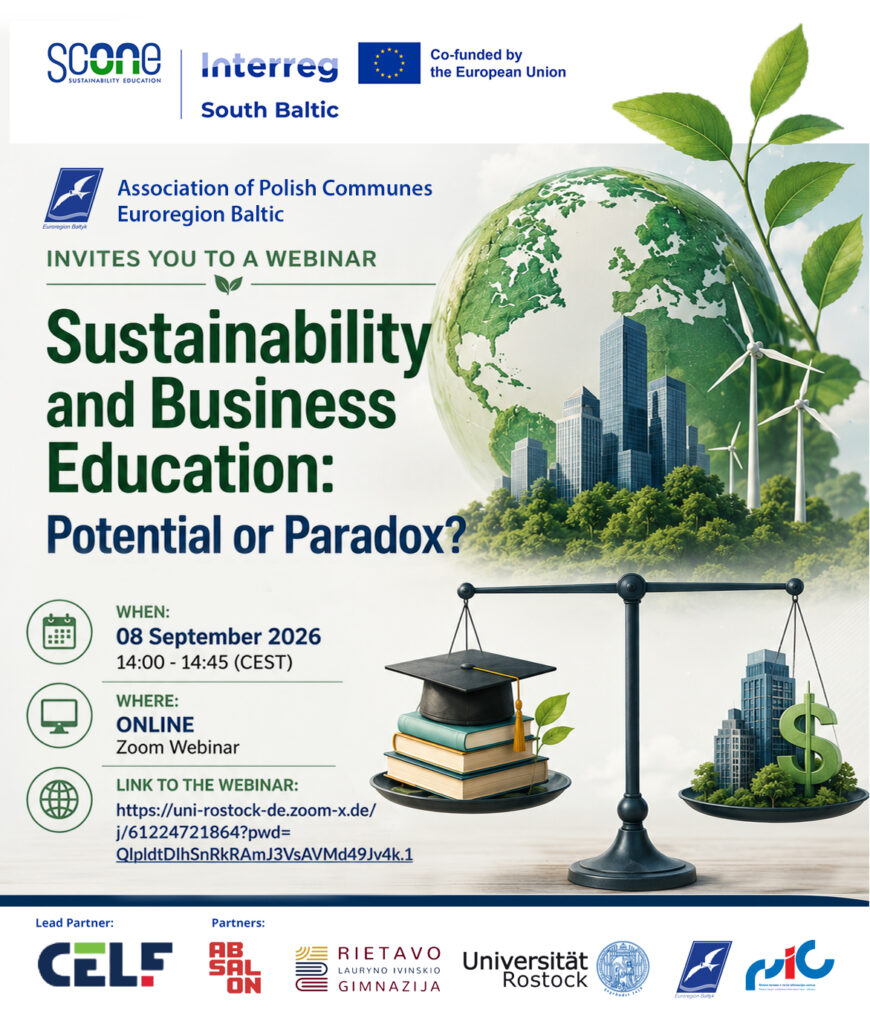
Webinar - Sustainability and Business Education: Potential or Paradox?

Join us for a webinar this September! Sustainability and Business Education: Potential or Paradox? Can business education effectively contribute to […]
7 July 2026r.
meeting

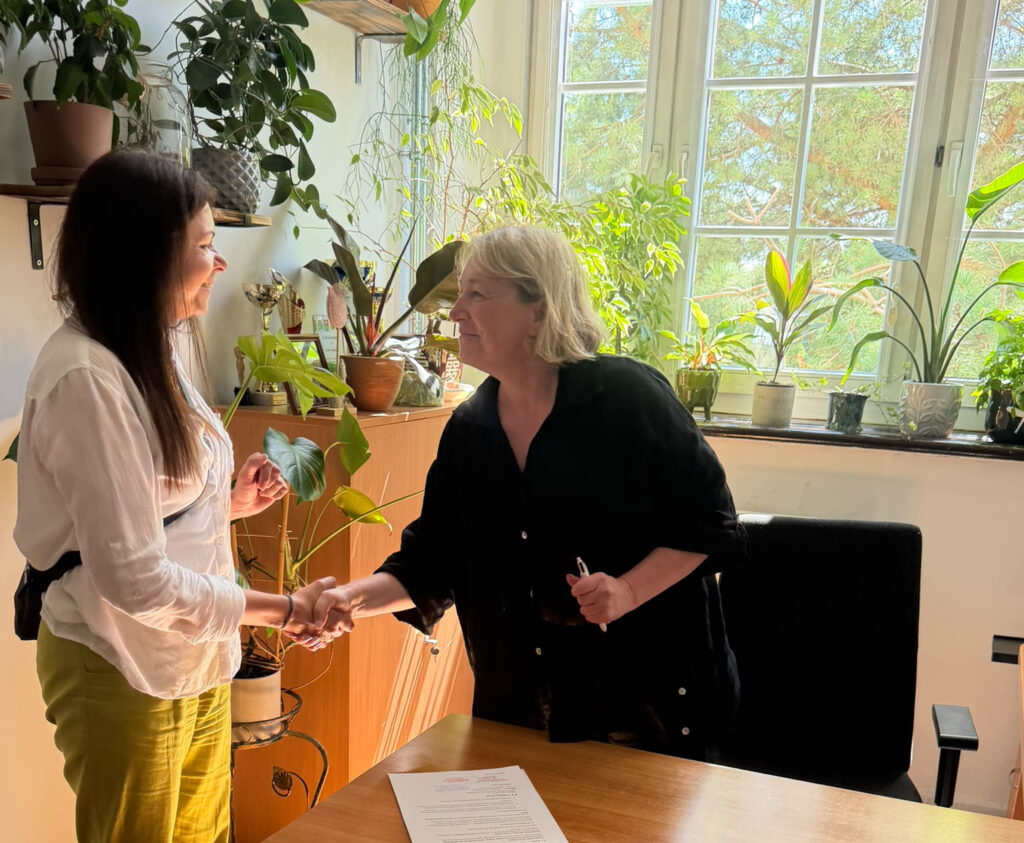
SCONE Project: Donation of Computer Equipment to Schools

As part of the SCONE project, co-financed by the Interreg South Baltic 2021–2027 Programme, the Association of Polish Communes Euroregion […]

29 June 2026r.

The fifth webinar as part of the SCONE project

The fifth webinar as part of the SCONE – Sustainability Education project is now behind us! On April 13, 2026, […]

15 April 2026r.

The Hackathon Finale as part of the SCONE Project

Yesterday marked the final stage of the international school Hackathon organized as part of the #SCONE project. The event featured […]
17 March 2026r.

Teacher Workshop - Day 3

The third and final day of the teacher workshop as part of the #SCONE project in Rostock has come to […]

27 February 2026r.

SCONE - second day of teacher training in Rostock

The second day of training focused on combining reflection with concrete planning of activities in the area of education for […]

26 February 2026r.

SCONE – Drugi dzień szkolenia nauczycielskiego w Rostocku

Drugi dzień szkolenia koncentrował się na połączeniu refleksji z konkretnym planowaniem działań w obszarze edukacji na rzecz zrównoważonego rozwoju (ESD). […]

26 February 2026r.

SCONE - How to teach sustainable development in practice - workshops for teachers in Rostock

From February 24 to 26, teachers from Denmark, Germany, Lithuania, and Poland are participating in workshops on implementing education for […]

25 February 2026r.

All project articles

  1. Webinar - Sustainability and Business Education: Potential or Paradox?

    7 July 2026r.

  2. SCONE Project: Donation of Computer Equipment to Schools

    29 June 2026r.

  3. The fifth webinar as part of the SCONE project

    15 April 2026r.

  4. The Hackathon Finale as part of the SCONE Project

    17 March 2026r.

  5. Teacher Workshop - Day 3

    27 February 2026r.

  6. SCONE - second day of teacher training in Rostock

    26 February 2026r.

  7. SCONE – Drugi dzień szkolenia nauczycielskiego w Rostocku

    26 February 2026r.

  8. SCONE - How to teach sustainable development in practice - workshops for teachers in Rostock

    25 February 2026r.

  9. SCONE - Creative Teaching for Sustainable Development

    13 January 2026r.

  10. SCONE - youth camp

    2 October 2025r.

  11. SCONE's first educational workshop

    15 May 2025r.

  12. SCONE - meeting in Denmark day 2

    10 January 2025r.

  13. SCONE project - sustainable development initiative

    19 July 2024r.

  14. SCONE - kick-off conference

    1 July 2024r.

  15. PROJECT SCONE - The Network for Cooperation towards Sustainable Development in the Southern Baltic

    28 May 2024r.

A program co-financing activities within the project

Interreg South Baltic

Logo Interreg South Baltic

Project Partners

  • CELF (DK) - lider
  • Centre for school and Learning, University College Absalon (DK)
  • Chair for Business Economics and Entrepreneurship education, University of Rostock (DE)
  • Rietavas Laurynas Ivinski Gymnasium (LT)
  • Rietavas Tourism and Business Information Centre (LT)
  • Association of Polish Communes Euroregion Baltic (PL)

PROJECT BRIEF

Program
Interreg South Baltic
Project No
STHB.04.01-IP.01-0004/23
Project Area
schools, youth, ecology, nature-based solutions in small and medium-sized towns
Project Scope
local and transnational
Role of STG ERB
partner with its own budget
Funding Level
80%
Project Budget
1,900,000.00 EUR
STG ERB Budget
166,173.20 EUR
Project Consortium
6 partners - 2 from Denmark, 1 from Germany, 2 from Lithuania, 1 from Poland, and 2 associated partners
Project Duration